Why AI Detection Is Failing Higher Education
AI detection tools promise to catch AI-generated work, but false positives, bias, and an arms race make them unreliable. There's a better path forward.
When ChatGPT launched, panic spread through higher education faster than the tool itself. Within weeks, faculty were Googling "how to detect AI writing." Within months, institutions were signing contracts with AI detection vendors. The logic felt obvious: if AI created the problem, surely AI could also detect it.
That assumption is falling apart.
Detection Is Guesswork, and the Data Shows It
AI detection tools analyze text for statistical patterns. They look at things like perplexity (how predictable the word choices are) and burstiness (how much sentence length varies) to estimate the likelihood that a machine generated the content. Notice the word estimate. These tools do not know whether AI wrote something. They calculate a probability and make a guess.
And the guesses are frequently wrong.
Research from multiple universities has found false positive rates between 5% and 20%, depending on the tool and the context. That means for every 100 students submitting genuinely original work, up to 20 could be wrongly flagged.
For non-native English speakers, it gets worse. A 2023 study out of Stanford found that GPTZero flagged more than 60% of TOEFL essays written by non-native speakers as AI-generated. Every single one of those essays was written by a human being. The students were being penalized not for cheating, but for writing in a second language.
When a tool built to protect academic integrity starts punishing students for how they naturally write, we need to step back and ask whether we are solving the right problem.
The Arms Race Nobody Can Win
There is a deeper structural issue with the detection approach, and it has to do with how the technology evolves.
Every time a detection tool gets better at identifying AI-generated text, a new wave of paraphrasing tools, "humanizers," and prompt engineering tricks emerges to get around it. This is not a bug or a temporary gap. It is the fundamental dynamic of detection. Detectors will always be playing catch-up because the generative models they are trying to detect are improving at a faster pace.
What this means in practice is troubling:
- Students who are actually cheating learn to run their AI output through a humanizer and avoid detection with minimal effort
- Students who wrote their own work get flagged because their writing style happens to score high on the detector's statistical model
- Faculty spend hours trying to interpret ambiguous percentage scores, often with no clear threshold for what counts as "AI-generated"
The honest students pay the price. The dishonest ones adapt. And educators are left managing a system that creates more problems than it solves.
What Happens When You Get It Wrong
A false accusation of academic dishonesty is not a minor inconvenience. I have spoken with students who were flagged by AI detectors for work they wrote themselves, and the impact goes well beyond the grade on a single assignment.
There are academic consequences, of course. Failing grades. Formal misconduct charges. Marks on transcripts that follow students into graduate school applications and job interviews.
But the personal toll is just as real. Students describe feeling humiliated, anxious, and distrustful of their institution. Some describe it as being treated as guilty until proven innocent, with no clear way to prove their innocence. For first-generation college students, ESL students, and neurodiverse learners who already face systemic barriers, a false flag can be the thing that makes them question whether they belong in higher education at all.
For institutions, the costs pile up differently. Appeals processes consume administrative time. Faculty lose hours to adjudication meetings. And the broader student body starts to view integrity systems as arbitrary and unfair, which undermines the very culture those systems are supposed to protect.
Asking a Better Question
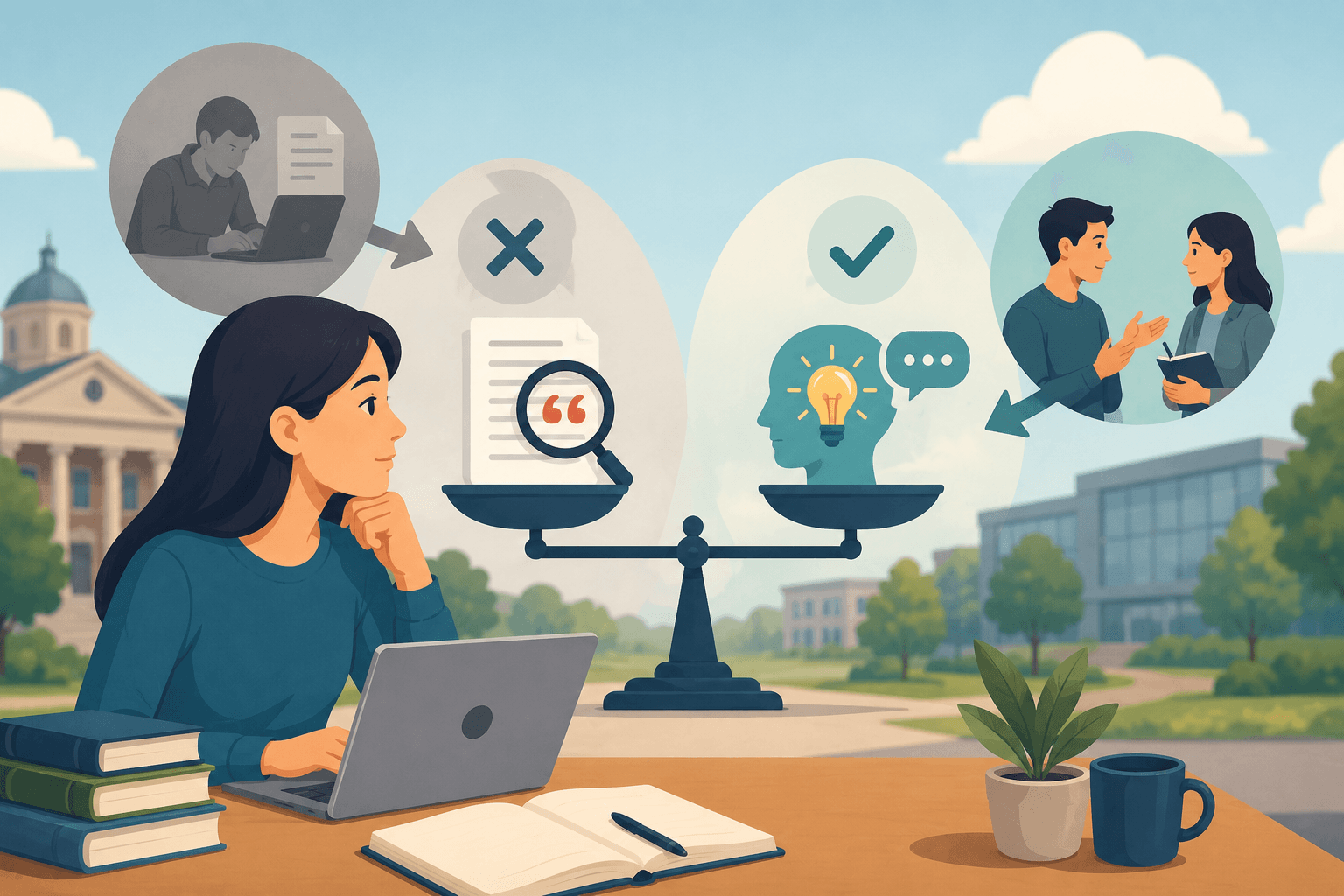
Here is what I keep coming back to: the detection approach tries to answer the question "Did AI write this?" But that question is becoming harder to answer every month as the technology improves. And even when you can answer it, the answer does not actually tell you what you need to know.
What if we asked a different question instead? What if we asked: "Does the student understand what they submitted?"
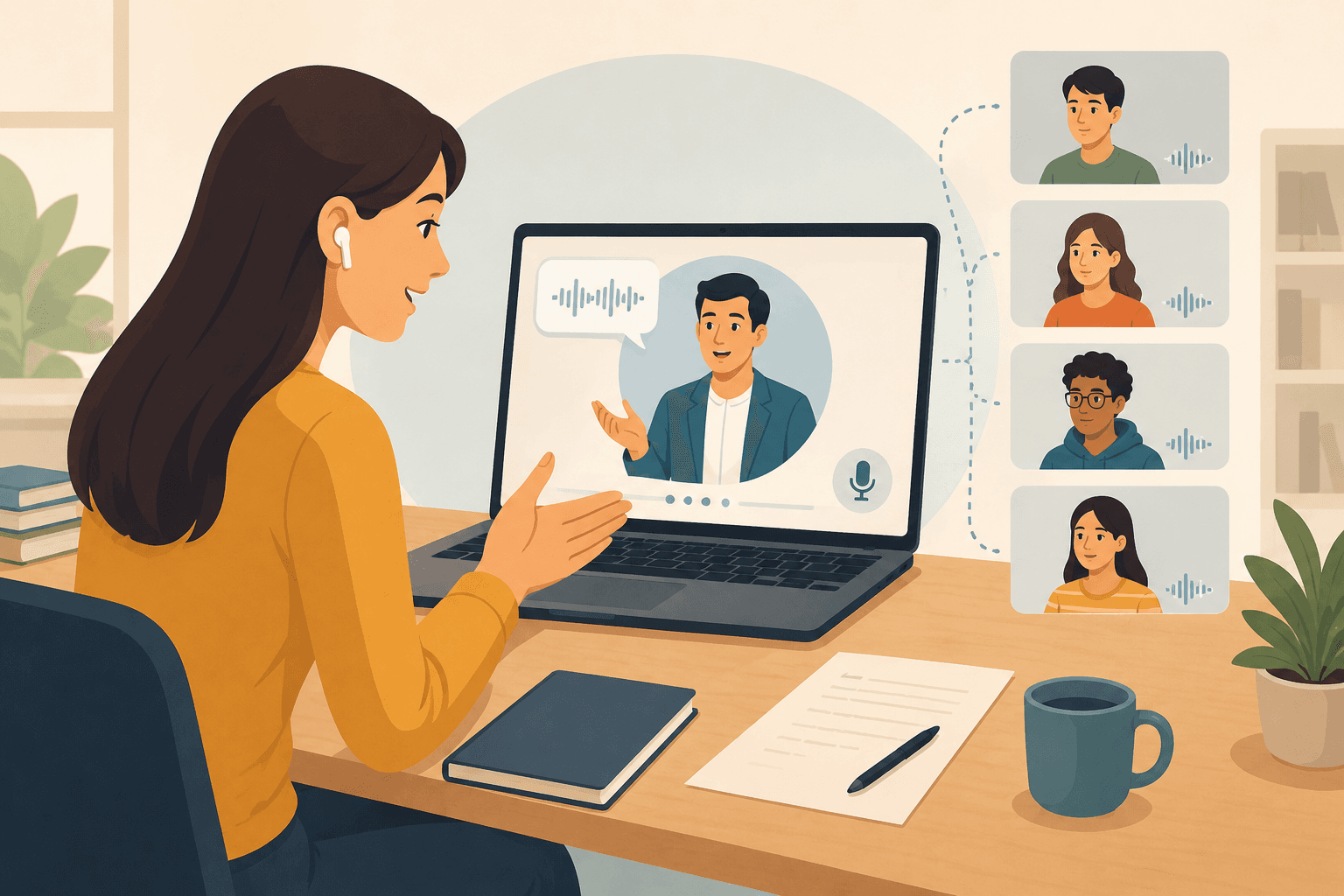
This changes everything. Instead of analyzing the text for machine-like patterns, you go to the source. You talk to the student. A short, focused conversation about the submitted work reveals things that no text analysis ever could:
- Can the student explain the core concepts in their own words?
- Do they understand the reasoning behind their arguments, or are they just reciting conclusions?
- Can they think on their feet when you push back on a claim or approach from a different angle?
- How do they handle the messy edges of their topic, the places where things get complicated?
This kind of assessment does not care whether the student used AI, worked with a tutor, or spent a week in the library. It measures what actually matters. Does this person understand the material?
Why Verification Works Where Detection Fails
The practical advantages of shifting from detection to verification are significant.
There are no false positives. You are not guessing about authorship based on statistical models. You are having a direct conversation with the student about their work. The evidence speaks for itself.
It works regardless of what tools the student used. Whether they drafted everything by hand, used AI for research, or collaborated with classmates, the verification measures comprehension. The process is tool-agnostic by design.
It is fairer across student populations. Non-native speakers, students with unconventional writing styles, and neurodiverse learners are all assessed on their knowledge and reasoning, not on whether their prose patterns match some statistical baseline.
It scales. This is the piece that used to be the bottleneck. Faculty have always known that oral assessment is powerful, but conducting a 15-minute conversation with every student in a 200-person course was never realistic. AI-powered adaptive probes change that equation entirely.
Where We Go from Here
AI is not leaving education. Students are going to use these tools, and in many contexts they should. Learning how to work effectively with AI is arguably one of the most valuable skills a student can develop right now.
The institutions that will lead in the next chapter of academic integrity are the ones that stop trying to police which tools students use and start building systems that verify whether students are actually learning. The shift is from suspicion to evidence. From detection to understanding.
That is the future we are building toward at Pruuva, and I believe it is the only approach that holds up as the technology continues to evolve.